TMF Washington 2019
Telecommunications & Media Forum (TMF)
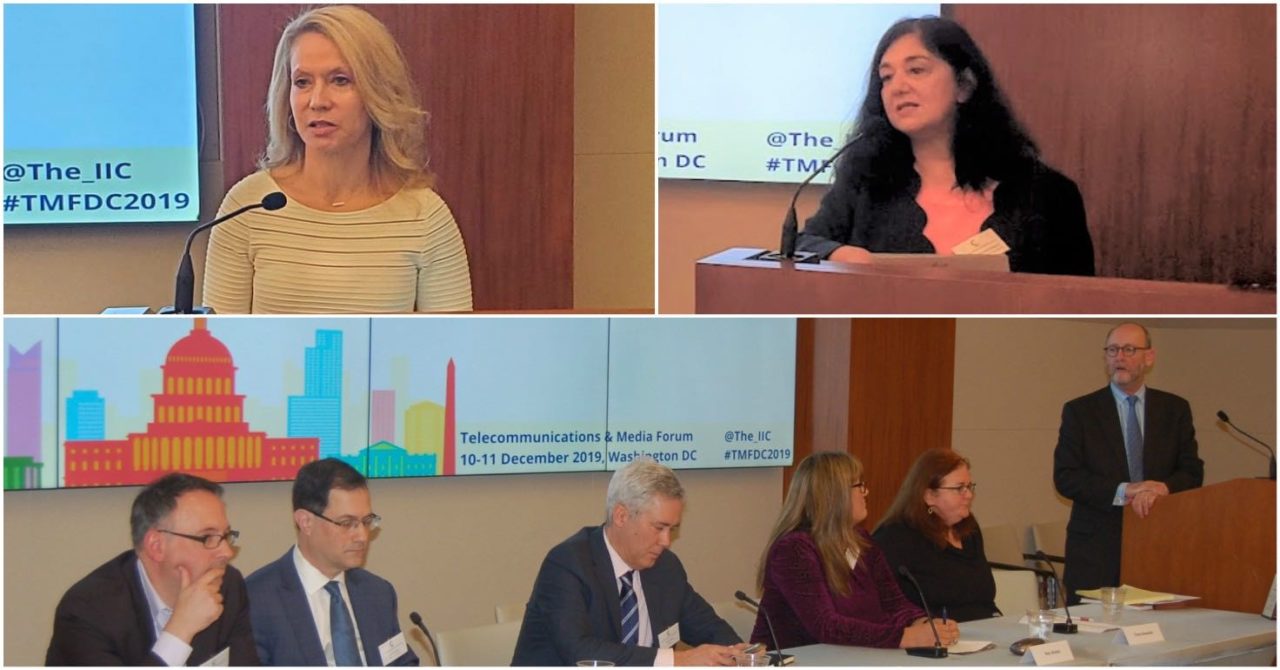
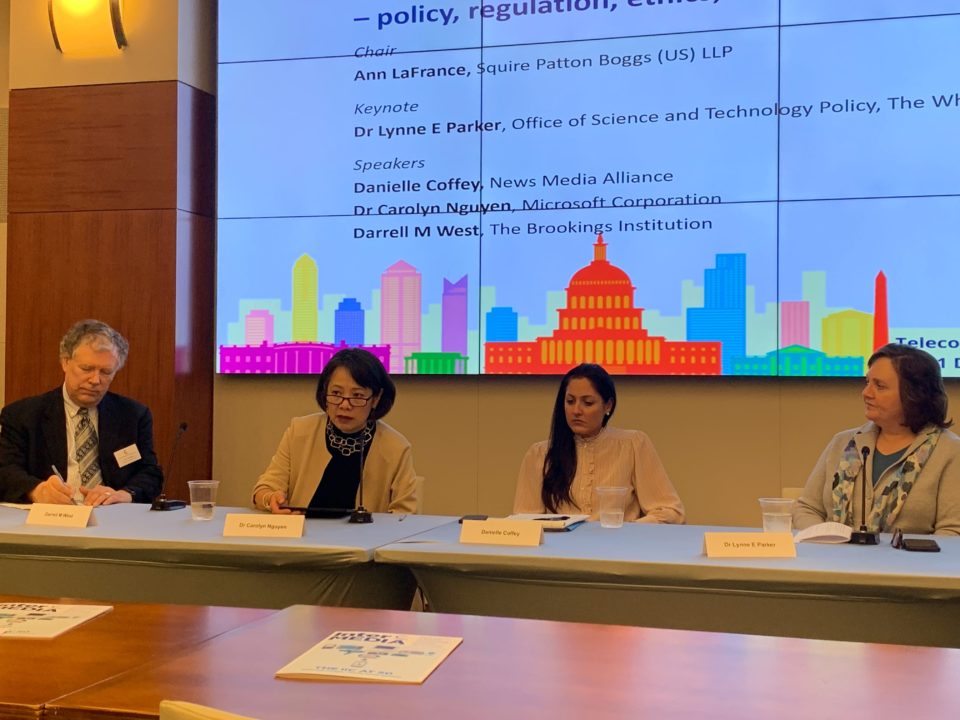
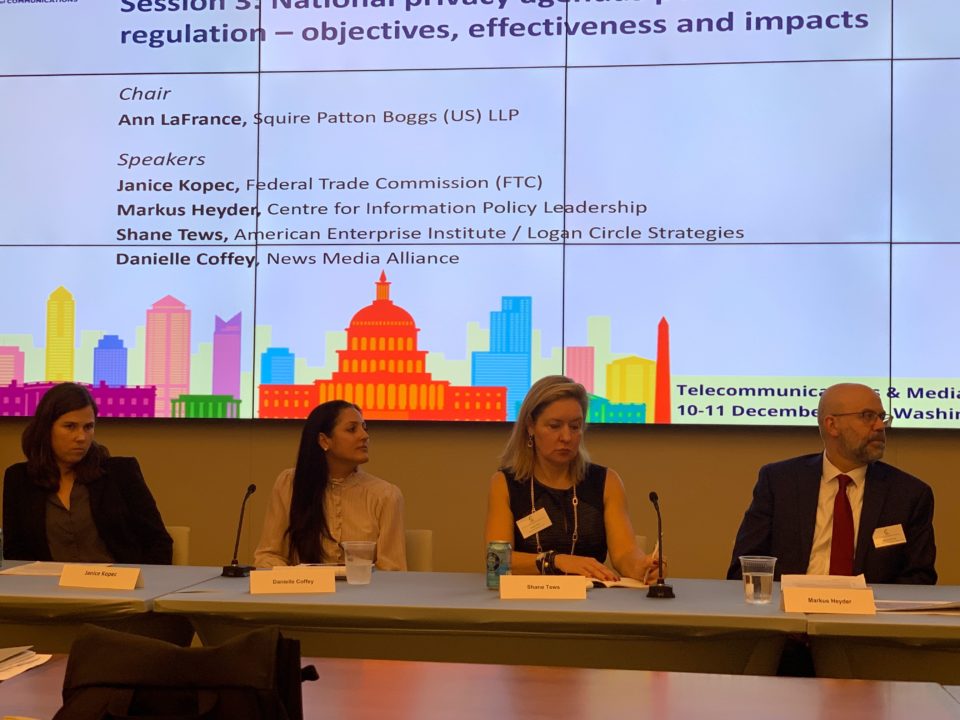
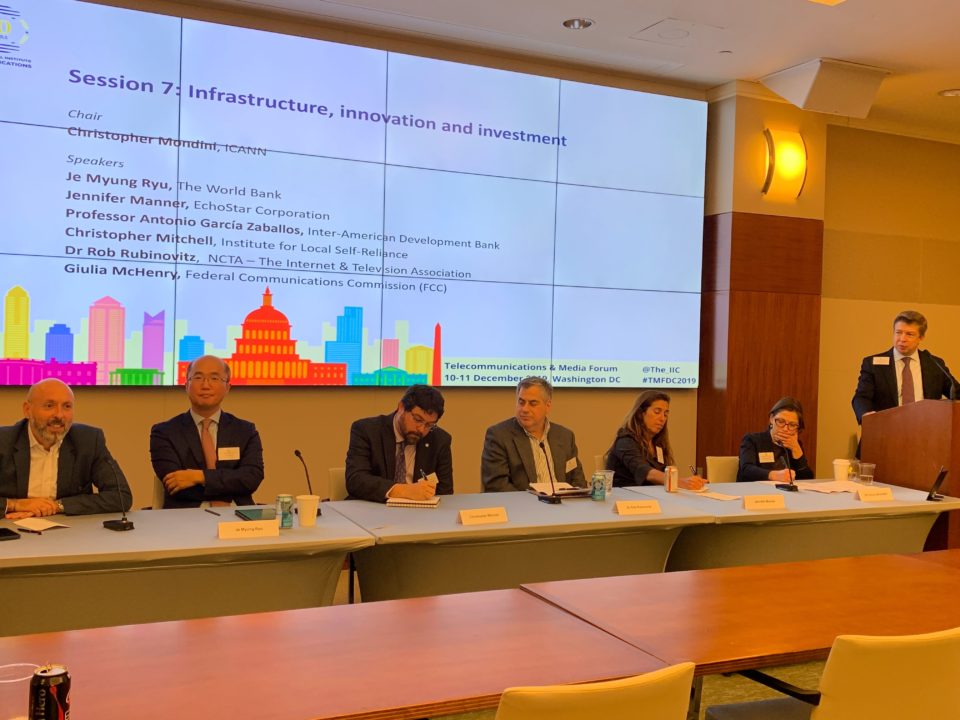
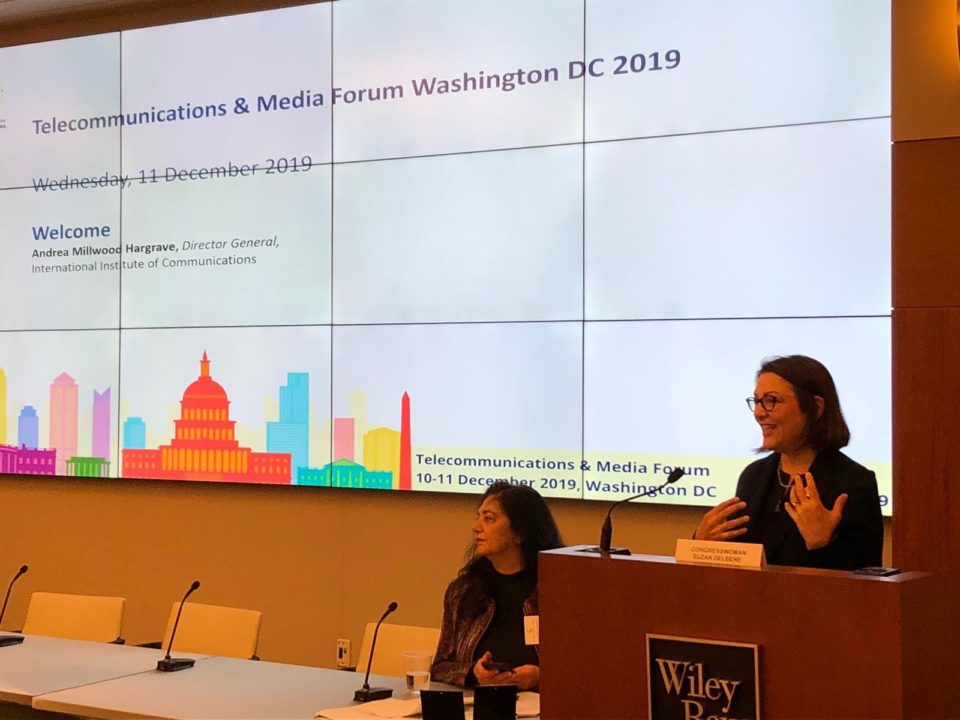
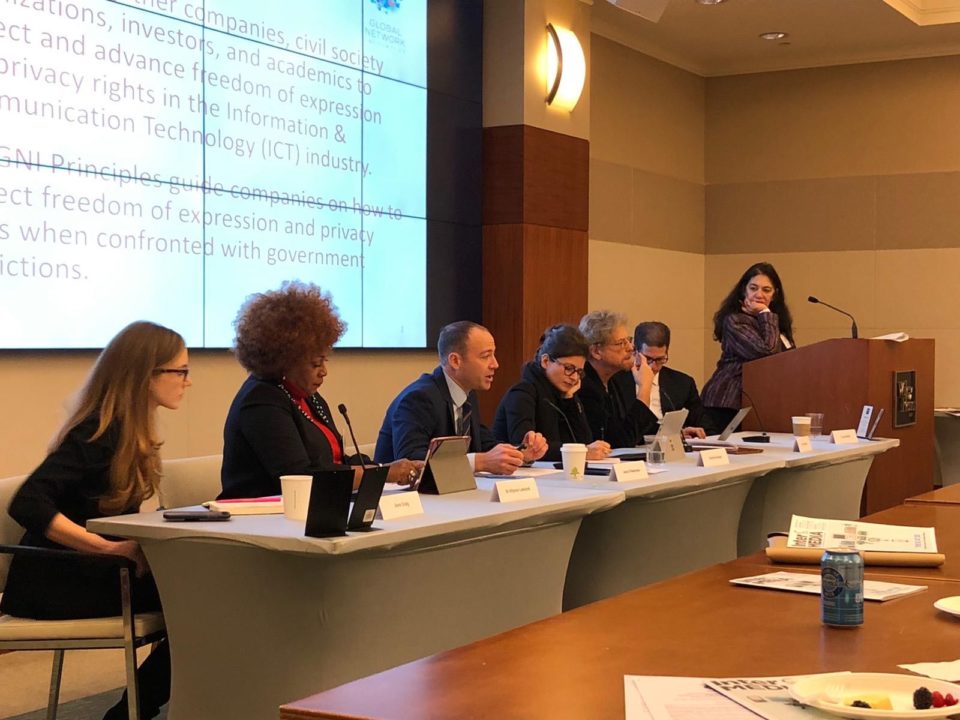
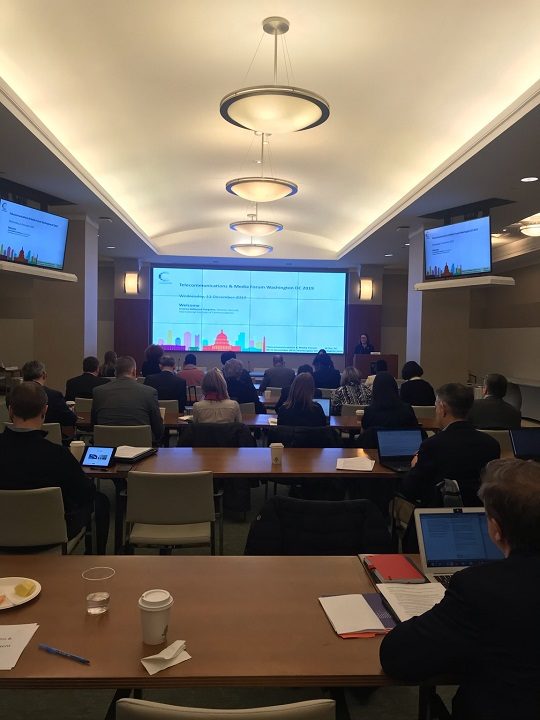
The IIC returned to Washington DC for our annual Telecommunications and Media Forum (TMF) in December 2019. We took some of the themes discussed during Communications Policy & Regulation Week in London this October across the Atlantic, bringing together leaders of technology and communications businesses and regulatory bodies to discuss the policy and regulatory roadmaps for the Americas and the rest of the world.
Forum presentations are on the record but subsequent discussions take place under the Chatham House Rule. This enables participants to speak freely and share their views in a neutral and collegiate environment.
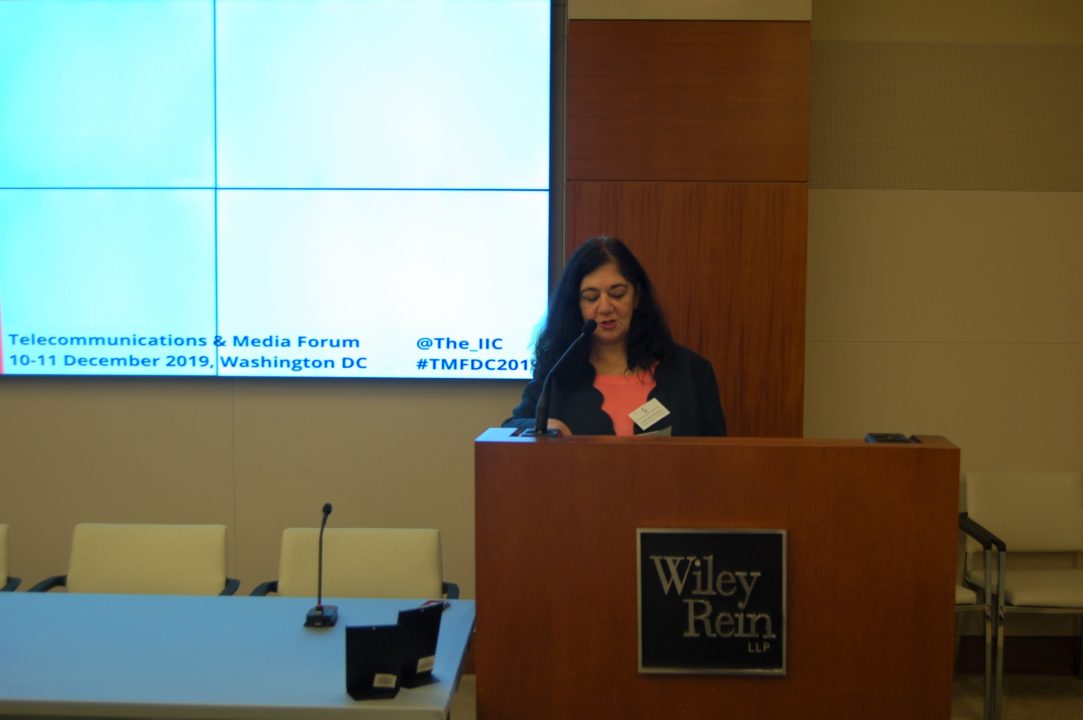 Andrea Millwood Hargrave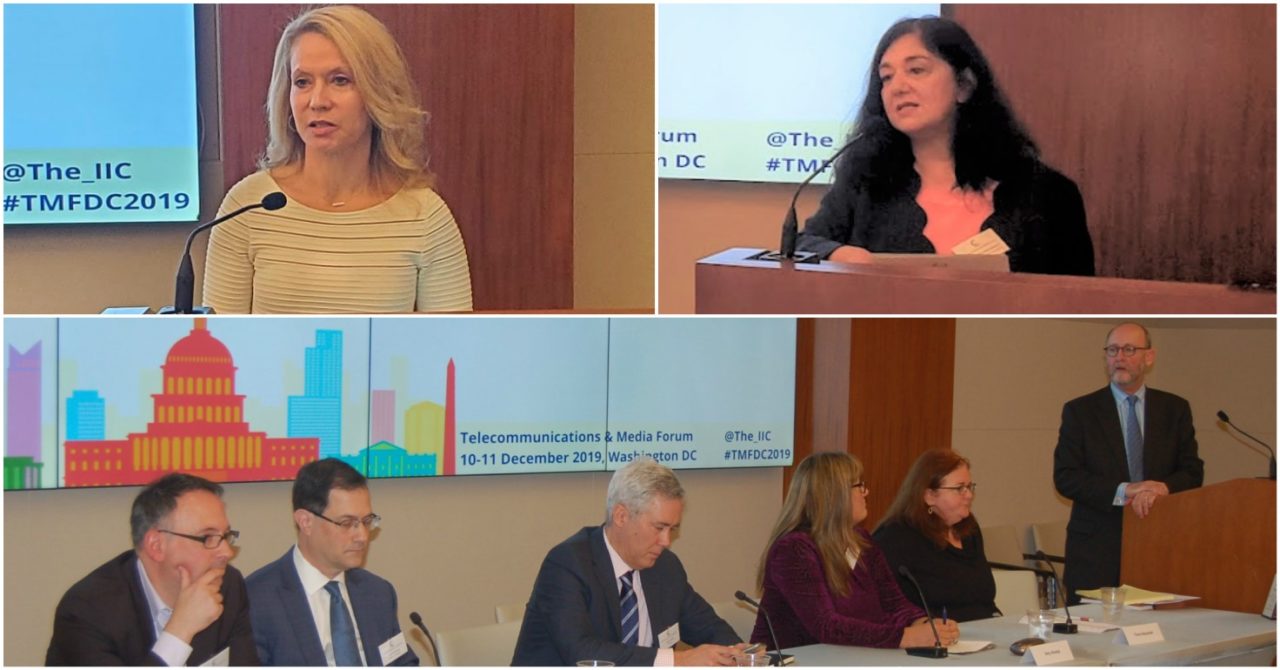
Please contact us to access the report enquries@iicom.org
Available to IIC members and meeting delegates.
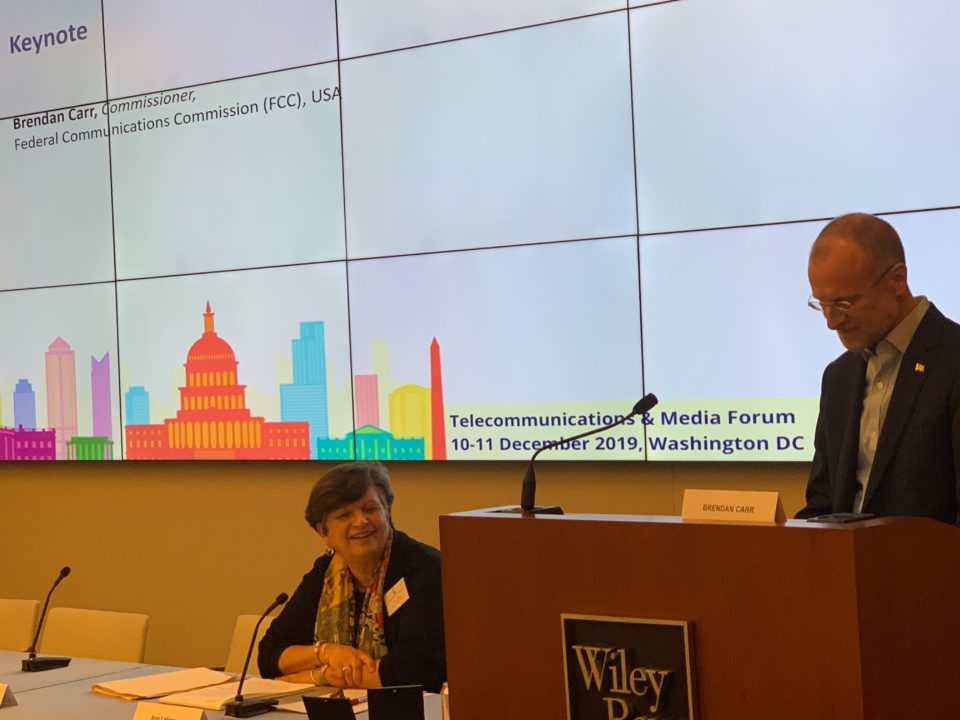
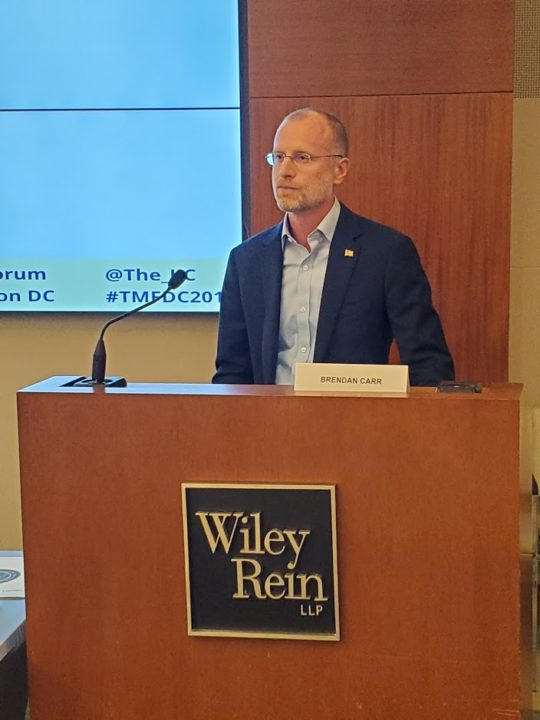
Brendan Carr was nominated to serve as a Commissioner of the FCC by President Donald J Trump and was confirmed unanimously by the United States Senate on August 3, 2017. He was sworn into office on August 11, 2017.
Commissioner Carr brings to the position over a dozen years of public and private sector experience in technology and communications law and policy.
Most recently, Mr Carr served as the General Counsel of the FCC. In that role, he served as the chief legal advisor to the Commission and FCC staff on all matters within the agency’s jurisdiction. Previously, he served as the lead advisor to FCC Commissioner Ajit Pai on wireless, public safety, and international issues. Before that, he worked as an attorney in the FCC’s Office of General Counsel, where he provided legal advice on a wide range of spectrum policy, competition, and public safety matters.
Prior to joining the Commission in 2012, Mr Carr was an attorney at Wiley Rein LLP, where he worked in the firm’s appellate, litigation, and telecom practices. He represented clients in both trial and appellate court proceedings, including complex litigation involving the First Amendment and the Communications Act.
Earlier in his career, he served as a law clerk for Judge Dennis W. Shedd of the US Court of Appeals for the Fourth Circuit. Mr Carr graduated magna cum laude from the Catholic University of America, Columbus School of Law and obtained a certificate from its Institute for Communications Law Studies. He also served as a Note and Comment Editor of the Catholic University Law Review. Mr Carr received his undergraduate degree from Georgetown University.

Bryan S Ware serves as the Assistant Secretary for Cyber, Infrastructure, and Resilience Policy. Mr Ware is responsible for leading DHS policy development in support of department-wide efforts to reduce national risks with a focus on critical infrastructure cybersecurity, federal network security, countering cyber-crime, and improving the security and resilience of the global cyber ecosystem, as well as national resilience initiatives that enhance Federal, State and local government and community preparedness and response capabilities. Mr Ware and his team also engage across the Department and with other stakeholders to identify and understand the impact of evolving risks and emerging technologies on homeland security efforts, and to ensure that the Department takes a coordinated whole-of-DHS approach to mitigate identified national risks.
Mr Ware is an entrepreneur, founding an artificial intelligence company in 1998 which he led as CEO through multiple rounds of Venture Capital investment until it was acquired in 2013 by Haystax. After serving as CTO of Haystax for several years during which he helped the company acquire leading cloud technology and cybersecurity companies, Mr Ware took over as CEO of Haystax in 2016 until its acquisition in 2018. Mr Ware started his professional career at leading Defense contractors working on advanced technology programs like the Star Wars program, early UAV payloads, and counterterrorism technologies.
Mr Ware has been issued multiple patents in artificial intelligence and mobile technology.
He holds a degree in Applied Optics from Rose-Hulman Institute of Technology.

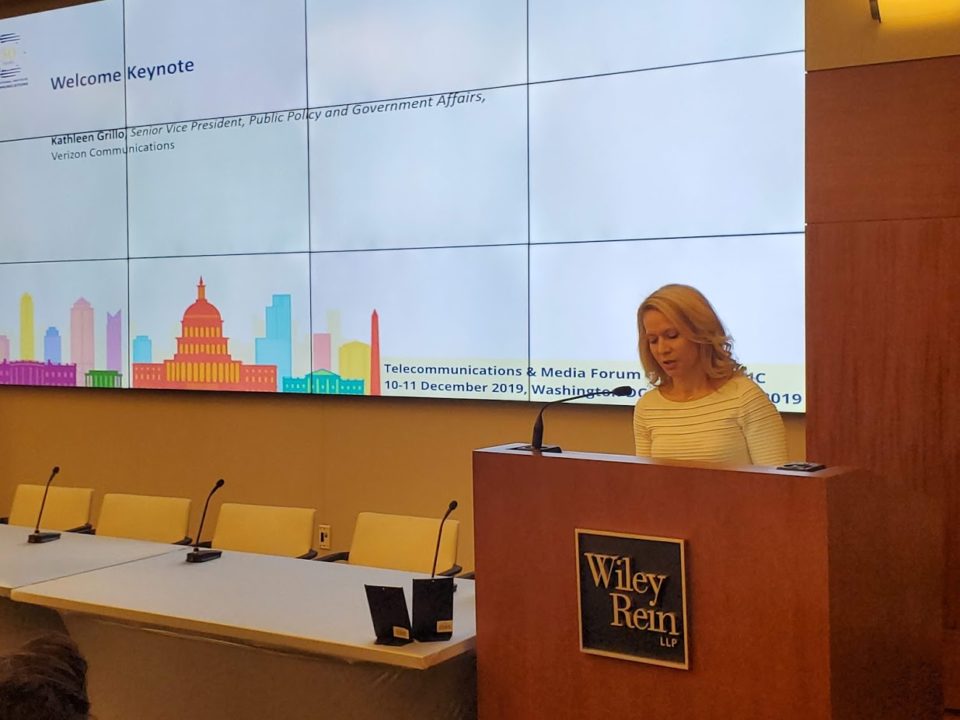
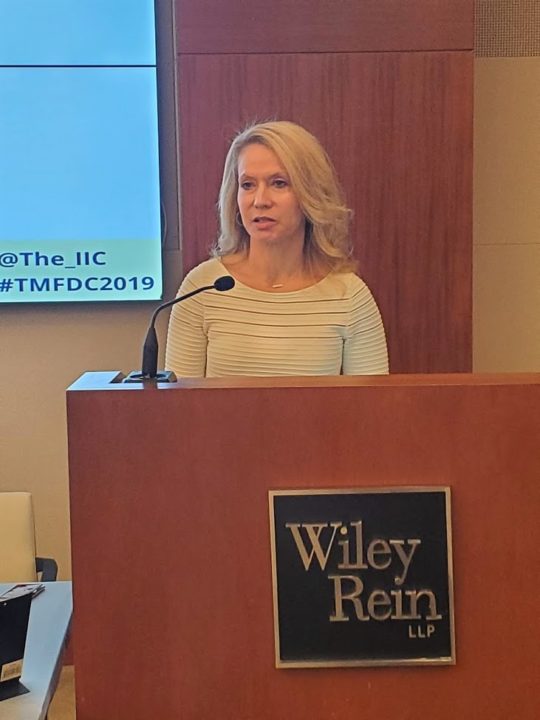
Kathleen Grillo leads Verizon’s public policy and government affairs team. She is responsible for the company’s public policy positions on a wide range of issues, including 5G deployment, spectrum, privacy, and internet governance. She represents the company before Congress, the Federal Communications Commission and other federal agencies, and state governments.Ms Grillo’s passion is creating a workplace that values, accepts and inspires employees. She has led several efforts at Verizon and in the communications and technology industries aimed at supporting, mentoring, and developing women leaders.
Before joining Verizon, Ms Grillo was in private practice at Williams & Connolly LLP, a Washington, D.C.-based law firm. She was a law clerk to Judge Harold H. Greene of the US District Court for the District of Columbia.
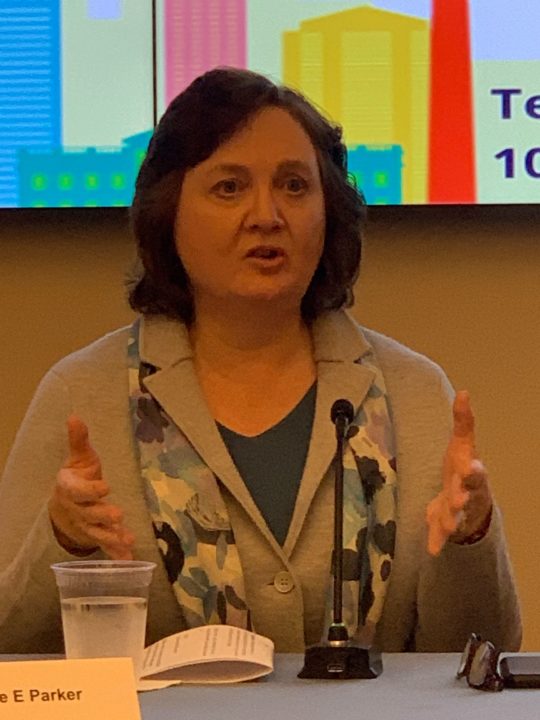
Dr Lynne E Parker is Assistant Director for Artificial Intelligence (AI) at the White House Office of Science and Technology Policy (OSTP). In this role, she is the White House lead for AI policy, and engages with numerous stakeholders to accelerate advances in AI for economic growth, improved quality of life, and national security. Dr Parker helped lead the development of President Trump’s Executive Order establishing the American Artificial Intelligence Initiative, which bolsters research, governance, and education and workforce training around AI. She is now overseeing the implementation of this Initiative and many other related AI actions.
Prior to joining OSTP, Dr Parker was Interim Dean of the Tickle College of Engineering at the University of Tennessee, Knoxville (UTK), and Professor in UTK’s Electrical Engineering and Computer Science Department. Dr Parker previously served as National Science Foundation’s Division Director for Information and Intelligent Systems, where she oversaw NSF’s investments in AI. Prior to joining UTK, she worked as a Distinguished R&D Staff Member at Oak Ridge National Laboratory.
Dr Parker is a world-leading expert on distributed and intelligent robot systems, human-robot interaction, and artificial intelligence with over 140 peer-reviewed papers on these and related subjects. She has taught many graduate and undergraduate courses on AI, machine learning, robotics, algorithms, and related topics.
Dr Parker received her PhD in computer science from MIT, and received the US Presidential Early Career Award for Scientists and Engineers (PECASE). She is a Fellow of AAAS (American Association for the Advancement of Science) and a Fellow of IEEE (Institute of Electrical and Electronics Engineers).

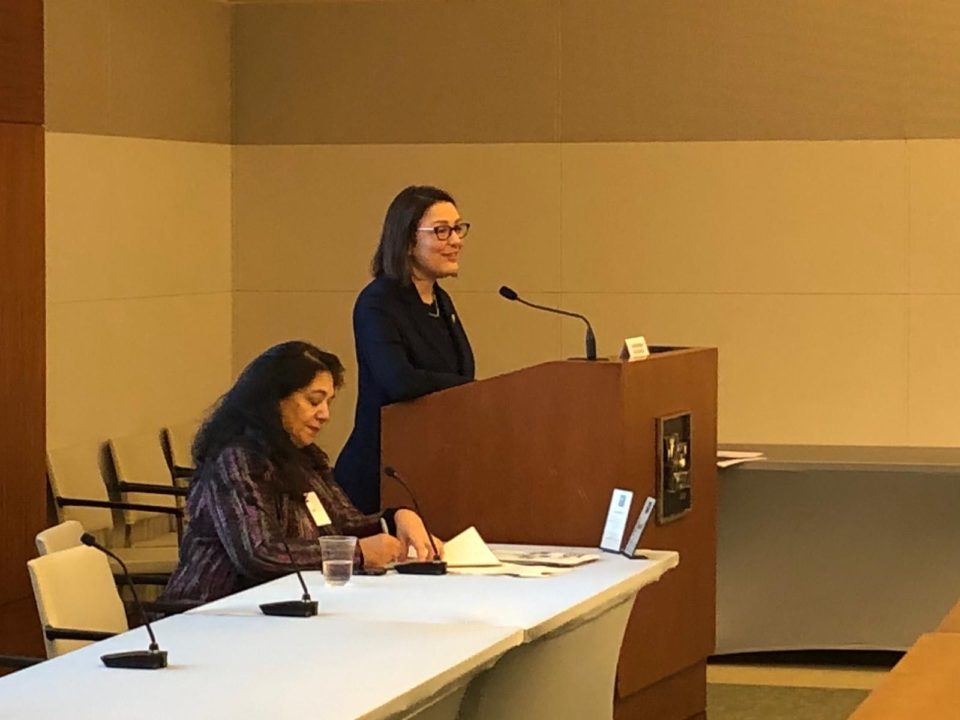
Congresswoman Suzan DelBene represents Washington’s 1st Congressional District, which spans from northeast King County to the Canadian border and includes parts of King, Snohomish, Skagit, and Whatcom counties.
First sworn into the House of Representatives in November 2012, Ms DelBene brings a unique voice to the nation’s capital with more than two decades of experience as a successful technology entrepreneur and business leader.
Ms DelBene takes on a wide range of challenges both in Congress and in the 1st District. She is a leader on issues of technology, health care, trade, taxes, environmental conservation, and agriculture, and is a champion for working families.
She currently serves as the Vice Chair of the House Ways and Means Committee, which is at the forefront of the debate on a fairer tax code, health care reform, trade deals, and lasting retirement security. She serves on the Select Revenue Measures and Trade Subcommittees.
Ms DelBene also serves as Chair of the forward-thinking New Democrat Coalition, the largest ideological caucus among House Democrats, and is co-chair of the Women’s High-Tech Coalition, Internet of Things Caucus, and Dairy Caucus. She is also a member of the Pro-Choice Caucus.
Ms DelBene spent part of her early childhood in Newport Hills and Mercer Island before her father lost his job. After fourth grade, her family moved all over the country in search of work. Through hard work and financial aid, she earned her BA in biology from Reed College.
She started her career in immunology research before earning an MBA from the University of Washington and embarking on a successful career as a technology leader and innovator. Over more than two decades as an executive and entrepreneur, she helped to start drugstore.com as Vice President of Marketing and Store Development and served as CEO and President of Nimble Technology, a business software company based on technology developed at the University of Washington. Ms DelBene also spent 12 years at Microsoft, most recently as corporate vice president of the company’s mobile communications business.
Before being elected to Congress, Ms DelBene served as Director of the Washington State Department of Revenue. During her tenure, she proposed reforms to cut red tape for small businesses. She also enacted an innovative tax amnesty program that generated $345 million to help close the state’s budget gap while easing the burden on small businesses.
Ms DelBene’s mix of real-world experience in the private and public sector gives her a deep understanding of how to build successful businesses, create jobs, implement real fiscal accountability, and adopt policies that provide individuals with access to opportunity.
Some of Ms DelBene’s priorities include:
Some of Ms DelBene’s accomplishments include:

Alan Davidson leads NTIA, the President’s principal advisor on telecommunications and information policy. As NTIA Administrator, Alan oversees a federal agency with more than 500 employees working to close the digital divide, manage federal spectrum resources, and build a better Internet.
Mr Davidson has spent the last 25 years working at the intersection of Internet technology, public policy, and the law. In his roles in government, public interest groups, and companies, Mr Davidson has focused on how society makes choices about the technologies we build.
Before joining NTIA, Alan worked at Mozilla Foundation, a global nonprofit that promotes openness, innovation and participation on the Internet. As Mozilla’s Vice President of Global Policy, Trust and Security, he led public policy and privacy teams promoting an open Internet and a healthy web. Mr Davidson served in the Obama-Biden Administration as the first Director of Digital Economy at the U.S. Department of Commerce. He started Google’s public policy office in Washington, D.C., and as Director of Public Policy, led government relations and policy in North and South America for seven years until 2012.
Mr Davidson has been a long-time leader in the Internet nonprofit community, serving as Director of New America’s Open Technology Institute where he worked to promote equitable broadband access and adoption. As Associate Director of the Center for Democracy and Technology, Alan was an advocate for civil liberties and human rights online in some of the earliest Internet policy debates.
He is a graduate of the Massachusetts Institute of Technology and the Yale Law School, and is a member of the District of Columbia Bar.

Dr Allyson Leacock, Chairman of the Barbados Broadcasting Authority and Director of National Transformation Initiative, Government of Barbados, is also an independent media and human development consultant. She led a coalition of 112 Media Houses in 24 Caribbean countries for 12 years and trained over 2000 Caribbean broadcasters. She served on the Executive Board of the Global Media AIDS Initiative (GMAI) and was elected for 2 terms as Chairman of the Global Steering Committee for the World AIDS Campaign. She was also Cultural Affairs Specialist at the US Embassy covering the Caribbean and Officer-In-Charge and Student Coordinator at the University of the West Indies Distance Education Centre (UWIDEC), now the Open Campus.
Dr Allyson Leacock was conferred with the Order of the Republic (OR) in Barbados National Honours on 30 November 2023. The award was given by the President of Barbados – In ‘recognition of sterling contribution to broadcasting, media relations, corporate communications, training, human resource development and educational technology, as well as distinguished service to Barbados as Head of National Transformation Initiative’.
Dr Leacock has a wide-ranging professional background including in executive management in corporate communications, media, needs assessment, training, human resource development and leadership, as well broadcast media including production and presentation as TV News Anchor, and as General Manager of the Caribbean Broadcasting Corporation.
She holds Masters and Ph.D. degrees in Educational Technology, Concordia University, Canada and BA (Double First Class Honours) in English and Education and the Diploma in Education (Dip.Ed with distinction) from Stirling University, UK. Her training also includes Diplomas in Human Resource Management, Facility Management, Arts Management and Alternative Dispute Resolution.
A Former national athlete, gymnast, dancer and actress, Dr Leacock is trained in sign language, is a volunteer with Special Olympics and Barbados Council for the Disabled.
Dr Leacock is also Former Chair of the International Institute of Communications Small Nations Regulators Forum 2021-2022.
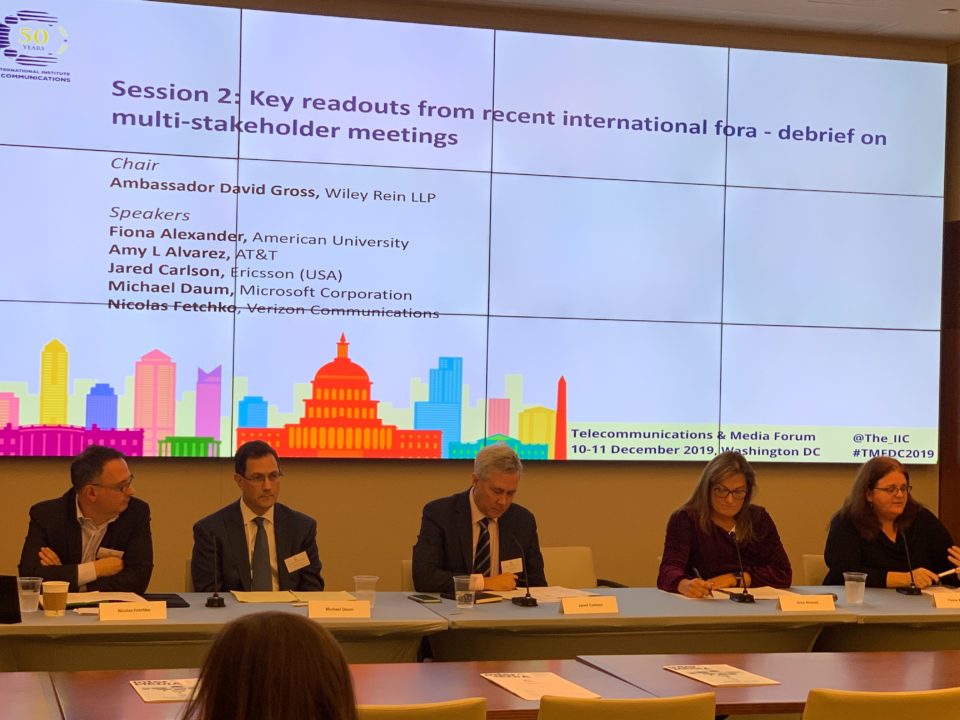
Amy Alvarez, Assistant Vice President, International External & Regulatory Affairs, leads the coordination of AT&T’s policy positions and advocacy before multilateral institutions, including the International Telecommunication Union (ITU), the Inter-American Telecommunication Commission (CITEL), and the Organisation for Economic Co-operation and Development (OECD).
She also is responsible for representing AT&T’s international telecommunications and Internet policy interests before the Federal Communications Commission International Bureau and managing AT&T’s engagement with the US Department of State.
A firm believer in the empowerment of women through technology, Ms Alvarez represented AT&T on the GSMA mWomen Working Group and leads the company’s engagement with TechGirls, an international exchange program for high school students from the Middle East and North Africa. She also serves on the International Advisory Council of the Institute for the Economic Empowerment of Women “Peace through Business” program.
Ms Alvarez began her career as a congressional aide to US Representative Edward J Markey.
She holds a Bachelor’s degree in International Relations from Boston University and a Master’s degree in Communication, Culture and Technology from Georgetown University.

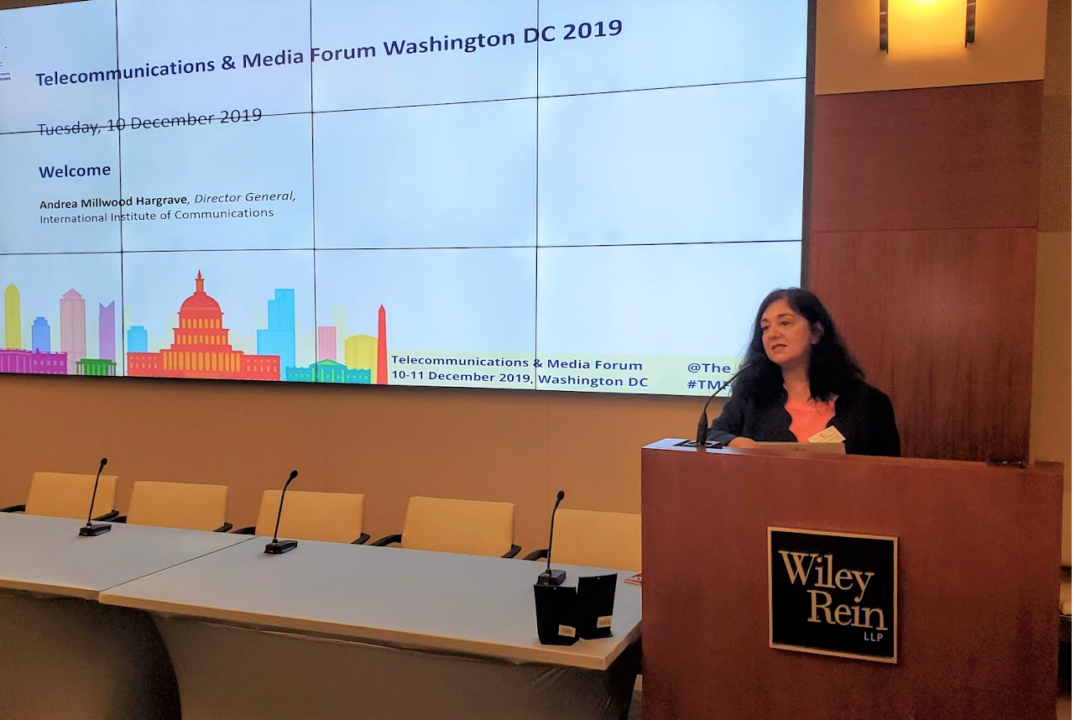
Andrea Gita Millwood Hargrave is an independent consultant in the field of regulation across the communications ecosystem, with particular emphasis on emerging trends in technologies and consumer behaviour.
An Associate of the Programme in Comparative Media Law and Policy, University of Oxford, and a Member of the Working Group on Information Access (part of UNESCO’s IFAP Programme), Andrea stepped down as the IIC’s Director General in 2020, having run its regulatory programme for over twenty years. A Fellow of the Royal Society of Arts, Andrea served as a regulator for content delivery organisations in the UK for many years and has published widely on communications policy in an international context, having acted as an Expert for both the European Union and the Council of Europe.

Ann LaFrance retired from Squire Patton Boggs (US) LLP on 30 June 2022. She was a senior partner in the New York office of Squire Patton Boggs and a founding member of the Firm’s global Data Practice. She was also an active participant in the Firm’s Communications Law Practice. Her experience covers a broad range of issues affecting the provision and regulation of advanced digital services and applications in the United States, Europe, the Middle East and the Caribbean.
Ms LaFrance began her legal career in 1980 with Squire in Washington, DC, where her practice focused on US and international telecommunications transactions, regulation and legislation. In 1996, she moved in-house to work as Chief International Counsel of MCI Communications Corp. (now Verizon), based in Washington, Brussels and London. Following her return to private practice in the Firm’s London office in 2004, she has advised a broad range of tech, telecom and multinational clients operating across a variety of sectors, as well as government and regulatory bodies, on data protection policy, GDPR compliance, international transfer agreements, AI ethical guidelines, blockchain, regulation of dominant operators, and the interplay between regulated “electronic communications” status and privacy laws in Europe, the U.S. and around the globe.
Since her return to the U.S. in 2019, Ms LaFrance continues to advise on complex cross-border data protection, e-privacy and cybersecurity matters, including transfer risk assessments post Schrems II and integrated approaches to global data protection compliance. She is currently advising clients on the new wave of U.S. state privacy laws that will take effect in 2023.
Ms LaFrance served as the Firm’s first Data Protection Officer in the UK and the EU and on the Firm’s data governance board. She is a Member of the Board of the International Institute of Communications and currently serves as its Vice President.
She is admitted to practice in New York, Massachusetts and the District of Columbia and is a Registered Foreign Lawyer in England and Wales.
Ms LaFrance also served as a International Institute of Communications Board Director 2016-2023.

Professor Antonio García Zaballos is Lead Specialist on telecommunications in Institutions for Development and also leader of the broadband initiative. He has more than 15 years’ experience in the telecommunications sector where he has worked for various companies.
Additionally, Professor García Zaballos is member of the steering committee at the IEEE on connectivity and the Internet for All Initiative at the World Economic Forum. He has an extensive experience in the telecom sector where has been working in different positions of responsibility.
At Deloitte Spain he led the practice of regulation and strategy for Latin America and the Caribbean, and previously he was the Head of the Cabinet for Economic Studies of Regulation in Telefónica of Spain, and also was Deputy Director of Economic Analysis and Markets at the Spanish Telecom Regulator (CMT). Professor García Zaballos has provided advisory services to Regulators, Telecom Operators and Governments in countries such as Saudi Arabia, China, Ecuador, Argentina, Dominican Rep., Paraguay, Polonia, and the Czech Rep.
Professor García Zaballos holds a PhD in Economics from the University Carlos III of Madrid and is an associated professor of applied finance to Telecommunications at the Instituto de Empresa Business School. He is author of several publications on economic and regulatory aspects of telecommunications.

Brian Hendricks is Head of Policy and Public Affairs for Nokia in the Americas Region, responsible for regulatory and legislative developments impacting technology, innovation, and deployment, including: spectrum allocation, infrastructure policy, privacy, and emerging policy on technologies critical to connected healthcare, intelligent transportation, and SmartCities. Mr Hendricks has nearly two decades of regulatory and legislative experience dealing with technology policy issues in the private sector, as a senior congressional staffer, and as an enforcement lawyer with Federal Communications Commission.
Prior to joining Nokia, Mr Hendricks served as Staff Director to the United States Senate Committee on Commerce, Science, and Transportation where he also served as General Counsel. He was the Committee’s lead legal and policy advisor in the areas of commerce, science, space, telecommunications, and emerging technology. Earlier in his career, Mr Hendricks served in the Enforcement Bureau at the Federal Communications Commission. Before joining the FCC, he spent six years in a variety of management positions with Ameritech and SBC Communications.
Mr Hendricks is a graduate of the Marshall-Wythe School of Law at the College of William and Mary where he also earned a Master of Public Policy (MPP) degree specialising in regulatory policy. He is an adjunct professor in the law school and graduate Public Policy program at William and Mary. He is a past Visiting Lecturer at the Silicon Flatirons Center for Law, Technology, and Entrepreneurship at the University of Colorado.

Camilla Bustani is Director, international at Ofcom, the UK’s communications regulator, where she oversees Ofcom’s programme of international engagement and activities in Europe and beyond. She has been actively engaged in the work of European and regional regulatory networks (including BEREC, ERGA and EPRA), and was involved in several EU legislative negotiations in the sectors Ofcom regulates. Ms Bustani has participated in a number of regulatory debates in communications sectors over the last 15 years, most recently around online regulation and the interaction between the different regulatory regimes that might be implicated. She has written on regulatory reform in developing countries and on the impact of institutional design on forms of regulatory cooperation.
Prior to joining Ofcom in 2006, Ms Bustani worked as a lawyer at Clifford Chance LLP in London for 8 years.
She obtained her bachelors’ degree from Harvard University, a masters’ degree from SIPA at Columbia University, and a law degree from Oxford University.

Christopher Mitchell is the Director of the Community Broadband Networks Initiative.
Mr Mitchell’s work focuses on telecommunications — helping communities ensure the networks upon which they depend are accountable to the community. He is a leading national expert on community broadband networks and speaks at conferences across the United States on the subject, occasionally to directly debate opponents of public ownership.
He was honored as one of the 2012 Top 25 in Public Sector Technology by Government Technology, which honors the top “Doers, Drivers, and Dreamers” in the nation each year. That same year, the National Association of Telecommunications Officers and Advisors named ILSR the Broadband Organization of the Year. In 2011, that organization also honored Mitchell for his policy work.
On a day-to-day basis, Mr Mitchell runs MuniNetworks.org, the comprehensive online clearinghouse of information about community broadband. In April, 2012, he published three in-depth case studies of citywide publicly owned gigabit networks, called “Broadband at the Speed of Light.” In April 2011, Mitchell released the Community Broadband Map, a comprehensive map of community owned networks.
His Twitter identity is @communitynets
He is also a professional sports photographer, shooting regularly for the University of Minnesota’s Golden Gophers and other clients in Minnesota. He has also worked as a server administrator, web geek, and in automated quality assurance for software.
Mr Mitchell earned a Master’s degree in Public Policy from the Hubert Humphrey Institute of Public Affairs at the University of Minnesota and a Bachelor’s degree in Political Science from Macalester College.

Christopher Mondini was appointed Vice President, Stakeholder Engagement, Europe and Managing Director, Brussels Office, ICANN the Internet Corporation for Assigned Names and Numbers in January 2021. He previously held the position of Vice President and Managing Director for Europe at ICANN. ICANN coordinates the addressing systems, such as the Domain Name System, that allow the Internet to expand rapidly as a globally unified network.
Mr Mondini leads ICANN’s outreach efforts to the business sector worldwide. His work with ICANN is focused on broadening participation among a variety of Internet stakeholders, while improving the quality of their experience.
From the halls of Washington to the start-ups of Silicon Valley, he has dedicated his career to bridging communications gaps that occur among diverse sectors — public, private and non-profit – and across international borders.
Mr Mondini began his career as a United States diplomat and later became a corporate investigator with Deloitte. He has investigated the world’s largest corporate corruption cases, while working with NGOs on ways to mitigate corruption risks. He also led grant-making teams for the Full Circle Fund, an engaged philanthropy organization addressing economic development challenges.
He speaks and writes frequently on topics such as Internet governance, technology policy and the digital divide
Mr Mondini holds degrees from Georgetown and Johns Hopkins Universities.

Clete Johnson provides advice and advocacy to clients navigating the complex terrain at the intersection of technology and security. Having served in a wide variety of national security and cybersecurity leadership roles on Capitol Hill, in the national security and intelligence communities, in the regulatory arena, and in the Executive Branch, Mr Johnson focuses in particular on improving the effectiveness and efficiency of government-industry collaboration.
Mr Johnson was Secretary Penny Pritzker’s Senior Adviser for Cybersecurity and Technology at the US Department of Commerce, where he coordinated the Department’s cybersecurity initiatives and the Department’s support for the Commission on Enhancing National Cybersecurity. He was also the Department’s representative for National Security Council staff deliberations on cybersecurity, encryption, and other policy issues at the intersection of technology and security.
Previously, Mr Johnson was appointed by Federal Communications Commission (FCC) Chairman Tom Wheeler as the FCC’s first Chief Counsel for Cybersecurity. In this position, he helped develop the FCC’s cybersecurity mission, focusing on creating new legal mechanisms for government collaboration with private sector stakeholders to improve the security and reliability of communications infrastructure. He was also the primary drafter of the charter for the Cybersecurity Forum for Independent and Executive Branch Regulators, a coordinating body of regulatory agencies which is presently chaired by the FCC.
Prior to his time at the FCC, Mr Johnson was Senator John D Rockefeller IV’s designated counsel on the Senate Intelligence Committee and counsel for defense, foreign policy, and international trade. In these roles, he was a leading staffer on bipartisan Senate cybersecurity initiatives and the primary staff drafter of the legislation that codified the National Institute of Standards and Technology’s collaborative process to work with industry to develop and update the widely-praised Cybersecurity Framework.
Before his government service, Mr Johnson worked for a major Washington-based law firm, where he practiced in the areas of international trade, defense, and security. Earlier, he served as an Army officer.
He is a graduate of the University of Georgia School of Law, where he was the editor-in-chief of the Georgia Journal of International and Comparative Law, and he received a master of science degree in international relations from the London School of Economics and Political Science. He received his bachelor’s degree from Harvard, where he graduated cum laude, cross-enrolled at MIT for service as Executive Officer of its Army ROTC Paul Revere Battalion.

Craig Moffett has been elected to Institutional Investor Magazine’s All-American Research Team in the US Telecom and/or Cable & Satellite sectors on eighteen separate occasions, including nine separate appearances as the #1 analyst in America in either US Telecom and/or Cable & Satellite. He has also been rated the #1 analyst in the US Telecommunications sector by Bloomberg Markets, and he has consistently ranked #1 in Research Quality in Greenwich Research’s annual survey in both Telecommunications and U.S. Cable and Satellite sectors.
Prior to founding MoffettNathanson, Mr Moffett spent more than ten years at Sanford Bernstein & Co., LLC as a senior research analyst. In 2011 he became the first analyst in the firm’s history to be ranked #1 in two sectors simultaneously by Institutional Investor.
He was previously the President and founder of the e-commerce business at Sotheby’s Holdings, the venerable auction house. In 1999, he led Sothebys.com to what was then the highest first year sales of any consumer website ever launched.
Mr Moffett over eleven years at The Boston Consulting Group, where he was a Partner and Vice President specialising in telecommunications. He was the leader of BCG’s global Telecommunications practice from 1996 to 1999. While at BCG, he led client initiatives in the US local, long distance, and wireless sectors, in both consumer and commercial services, and advised companies outside the US in Europe, Latin America, and Asia. His relationship with a US RBOC spanned more than a decade, and he was the author of more than 20 articles about the telecommunications industry during the 1990s. He published analyses and forecasts of the overcapacity and pending collapse of the US long distance business as early as 1998.
Mr Moffett graduated from Harvard Business School with Honors in 1989. He received a BA from Brown University phi beta kappa in 1984.

Danielle Coffey is Executive Vice President and General Counsel for the News Media Alliance, which represents 2,000 news media outlets worldwide. Ms Coffey leads the organisation’s advocacy and strategy. While focusing on a digital future for news, which includes building a more favorable legislative and regulatory environment for the digital distribution of news content, her government affairs and policy advocacy is driven by news publishers’ core mission of a flourishing, free and independent press.
Before joining the News Media Alliance, Ms Coffey was Vice President and General Counsel for the Telecommunications Industry Association (TIA) where she led advocacy efforts for member companies on issues that affected the internet ecosystem, broadband deployment, content regulation and international trade. She was responsible for informing and educating government representatives about member companies’ technologies and advocated for policies that facilitate innovation.
Ms Coffey is a member of the Board of Directors of the Copyright Alliance.
Ms Coffey earned her JD from the Catholic University Law School, with a specialization in Communications Law.

Darrell M West is the Vice President of Governance Studies and Director of the Center for Technology Innovation at the Brookings Institution. He holds the Douglas Dillon Chair in Governance Studies. Previously, he was the John Hazen White Professor of Political Science and Public Policy and Director of the Taubman Center for Public Policy at Brown University. His current research focuses on American politics, technology policy, and artificial intelligence.
Mr West is the author of 24 books including Divided Politics, Divided Nation: Hyperconflict in the Trump Era (Brookings, 2019), The Future of Work: Robots, AI, and Automation (Brookings, 2018); Megachange: Economic Disruption, Political Upheaval, and Social Strife in the 21st Century (Brookings, 2016), Billionaires: Reflections on the Upper Crust (Brookings, 2014), Digital Schools (Brookings, 2012), The Next Wave: Using Digital Technology to Further Social and Political Innovation (Brookings, 2011), Brain Gain: Rethinking U.S. Immigration Policy (Brookings, 2010), Digital Medicine: Health Care in the Internet Era (Brookings, 2009), Digital Government: Technology and Public Sector Performance, (Princeton University Press, 2005), and Air Wars: Television Advertising in Election Campaigns (Congressional Quarterly Press, 2013), among others.
Mr West is the winner of the American Political Science Association’s Don K. Price award for best book on technology (for Digital Government) and the American Political Science Association’s Doris Graber award for best book on political communications (for Cross Talk). His books have been translated into Chinese, Japanese, and Korean, and he has delivered nearly 150 lectures in a dozen different countries, including China, Japan, Russia, Taiwan, Mexico, Brazil, Germany, Netherlands, Portugal, Turkey, Bahrain, and the United States, and has been quoted in leading newspapers, radio stations, and national television networks around the world.

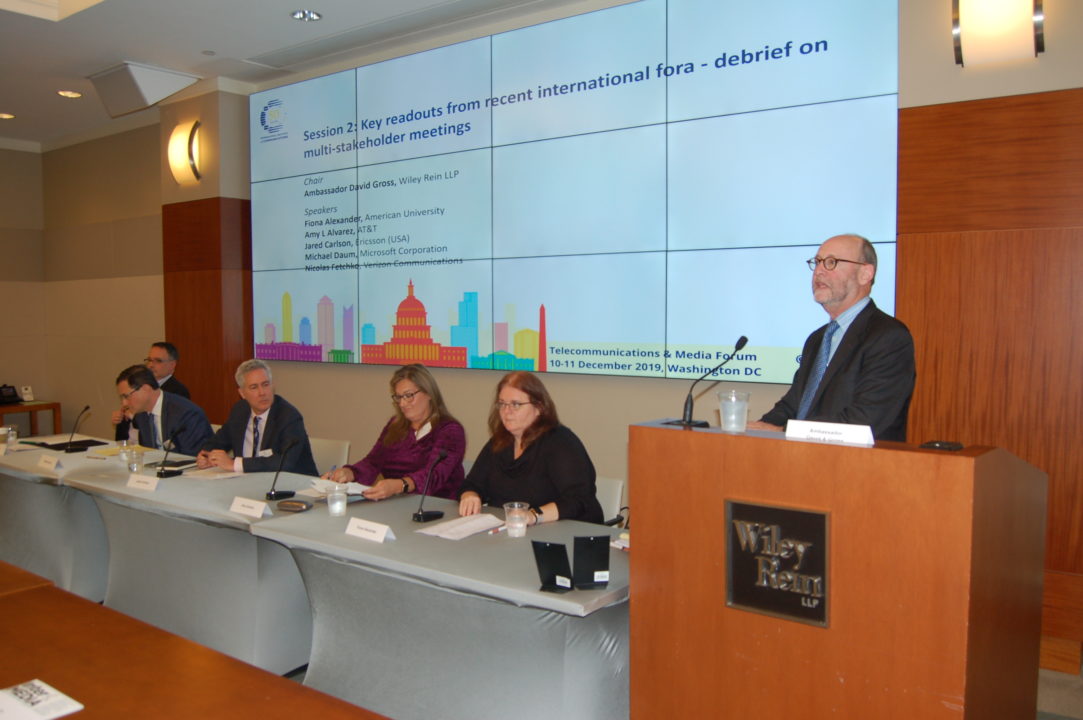
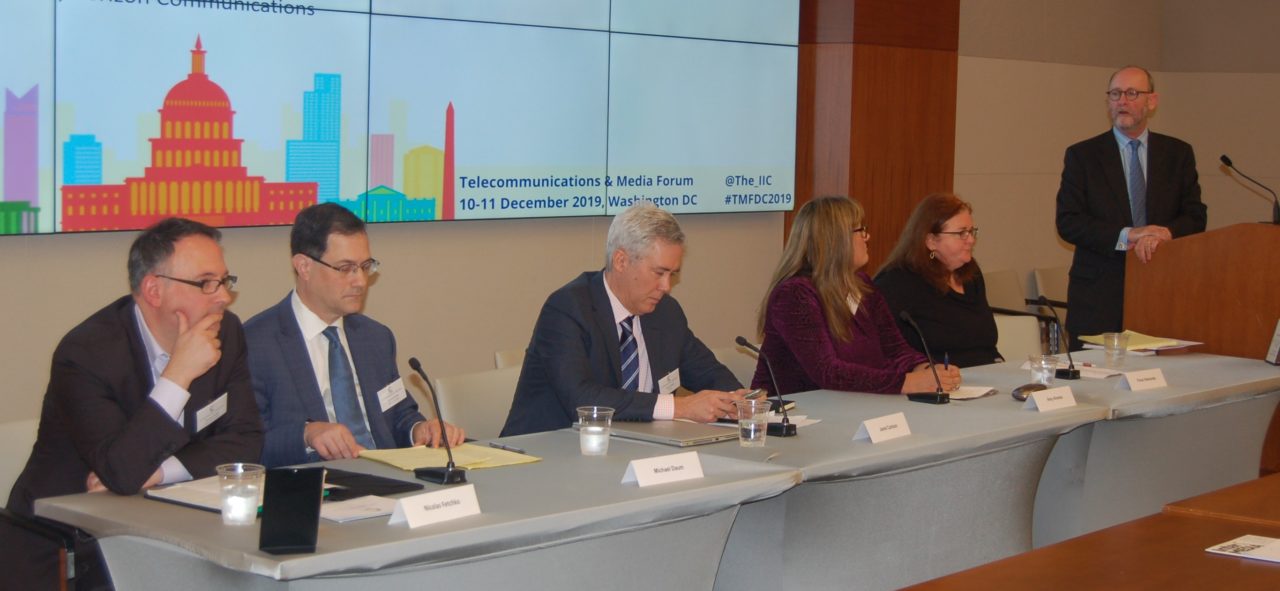
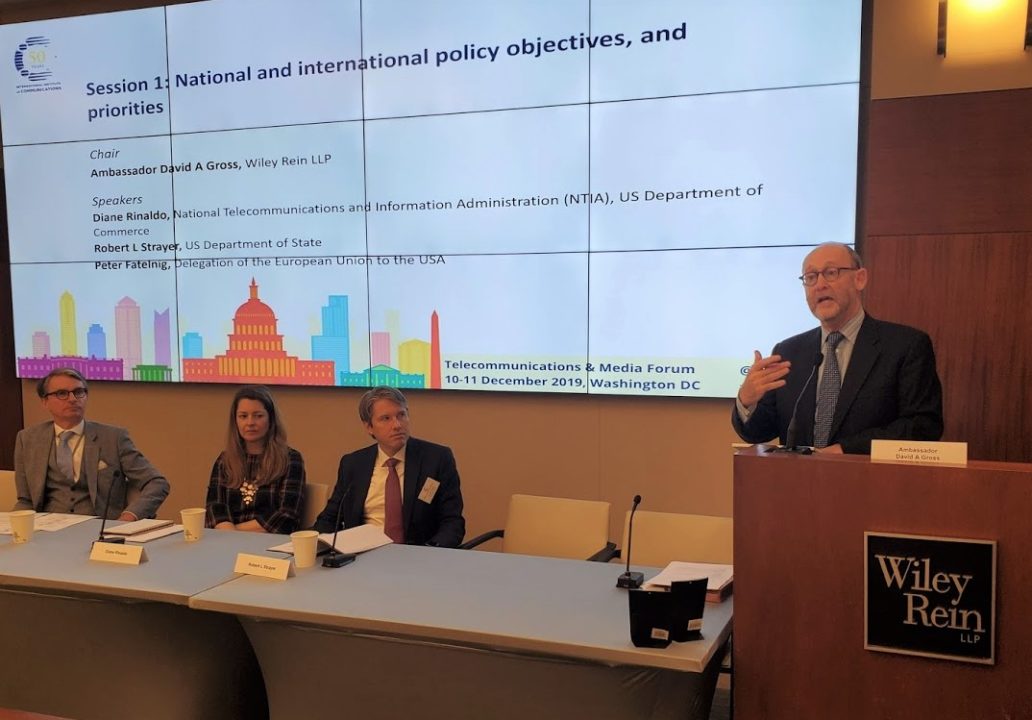
Ambassador David Gross co-chairs Wiley’s Telecom, Media & Technology Practice. He is widely recognised as one of the world’s foremost experts on international telecommunications and Internet policies, having addressed the United Nations (UN) General Assembly and led more U.S. delegations to major international telecommunication conferences than anyone else in modern history.
Noted as bringing “innovation and vision to the rapidly changing TMT industry” by Who’s Who Legal and as one of the “Top 30 Telecommunications lawyers in the world” by Euromoney, Ambassador Gross draws on more than 30 years of experience as a lawyer, global policymaker, and corporate executive to assist US companies seeking to enter or expand international businesses.
He also advises non-US companies, and industry organizations seeking to invest in, monitor, and understand the US and international markets, as well as national governments. Ambassador Gross advises companies and others on international and domestic telecoms, Internet, and high-tech strategy focusing on both specific markets and international organizations such as the International Telecommunication Union (ITU), the Organisation for Economic Cooperation and Development (OECD), and the Asia-Pacific Economic Cooperation (APEC), as well as many regional organisations.
Ambassador Gross is also an Advisory Council member at the International Institute of Communications.

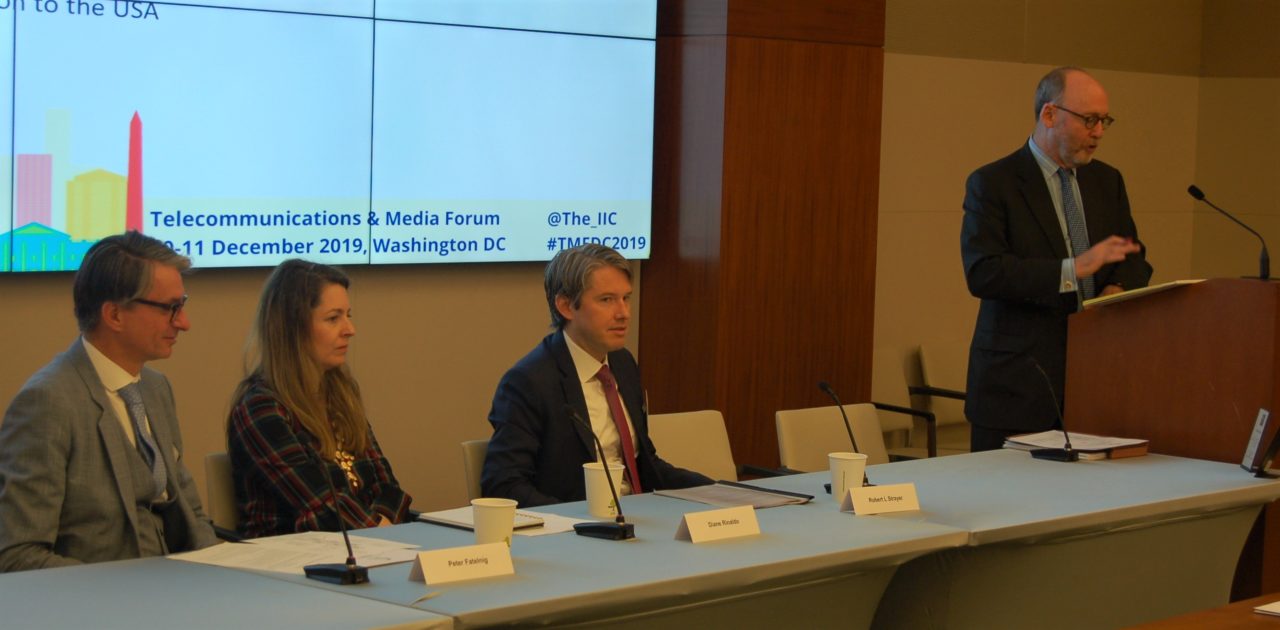
Diane Rinaldo was sworn in as Deputy Assistant Secretary for Communications and Information at the Department of Commerce on April 20, 2018. She serves as the Deputy Administrator of the National Telecommunications and Information Administration (NTIA), the Executive Branch agency principally responsible for advising the President on telecommunications and information policy.
Focusing on cybersecurity and technology policy, Ms Rinaldo has extensive experience in government and the private sector throughout her career. She staffed the House Permanent Select Committee on Intelligence, where she was the lead committee staffer on Congress’ landmark cybersecurity legislation, the Cybersecurity Act of 2015. She also served as the oversight and budget monitor for the National Security Agency and the defense network systems, and served as Deputy Chief of Staff to Congressman Mike Rogers as his top technology policy staffer.
Recognised for her work on cybersecurity, Ms Rinaldo was awarded the Executive Women’s Forum’s 2016 Influencer of the Year award. She earned a bachelor’s degree in Political Science from the University of Maine and an Executive Certificate from the Kennedy School of Government at Harvard University for cyber studies.

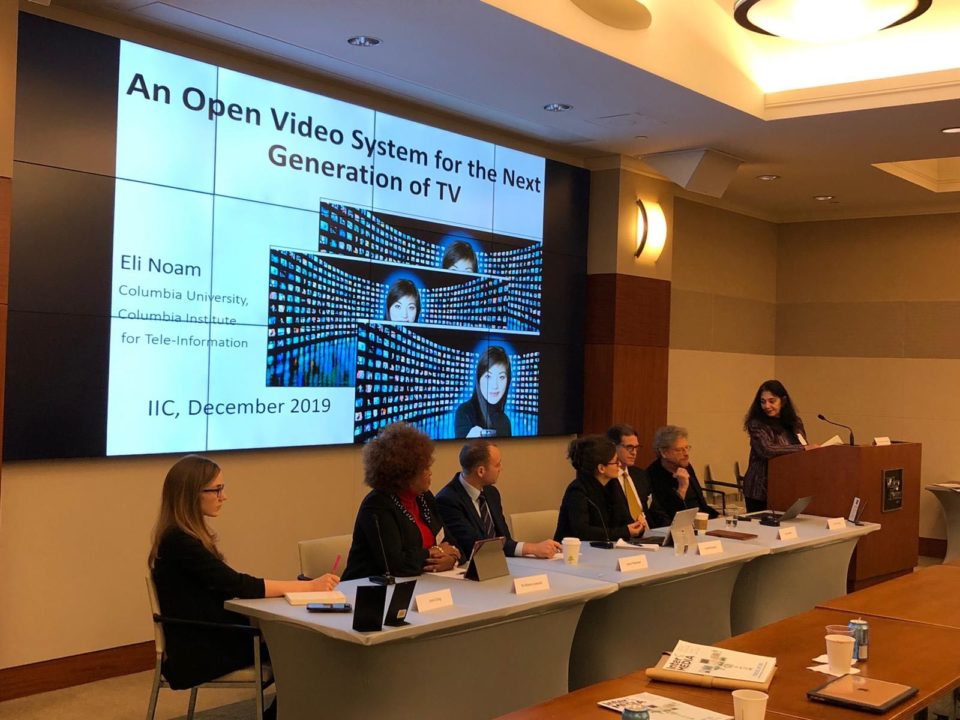
Eli Noam is Professor of Economics & Finance at the Columbia Business School, and its Garrett Professor of Public Policy & Business Responsibility. He is the Director of the Columbia Institute for Tele-Information, a research centre focusing on management and policy issues in communications, internet and media.
Professor Noam has published 37 books and over 350 articles. Recent books include: Who Owns the World’s Media (2016 Oxford); two textbooks on media and digital management (2018 Palgrave, with 1.7 and 1.9 million free downloads in 2020); Media and Digital Management (Palgrave); and two forthcoming books on streaming video as the next generation of TV, one on technology and business, the other on content and regulation (Elgar 2020.)
His Public Service roles include, Commissioner for Public Services of New York State; White House appointment to President’s IT Advisory Committee; Advisory boards for governments of Ireland, Sweden, and New York.
Professor Noam received undergraduate and graduate degrees from Harvard University, and honorary doctorates from the universities of Munich and Marseilles Aix-la-Provence.

Evelyn Remaley has been a recognized leader in the government and private sector – spearheading efforts on broadband funding, cybersecurity and spectrum management. Evelyn provides strategy, program management, and the ability to communicate complex subjects to her clients. She has a unique perspective that can help communications and technology companies meet evolving legal and regulatory challenges.
Evelyn most recently served as Acting Assistant Secretary of Commerce for Communications and Information and Acting Administrator of the National Telecommunications and Information Administration. At NTIA, Evelyn led a team of experts providing senior policy guidance to the Secretary of Commerce and the White House on government priorities, including broadband funding to close the digital divide, supply chain risk management, privacy, the free flow of information, encryption, spectrum, and the Internet of things. As a leader in government, she helped to advance access to innovative communications services and enhance trust and safety in the digital economy.
Prior to her work within the federal government, she led a Cybersecurity and Internet Policy Team at Booz Allen Hamilton in McLean, VA. Ms. Remaley also worked for a leading Internet service provider in its Internet Privacy and Security Federal Practice and spent time deploying the Internet across communities through her work with public libraries.
Evelyn, her husband and three children love travel, nature and adventure. During her downtime (if not at a baseball, lacrosse or crew meet!) you are likely to find her hiking, biking, or planning their next national park or world adventure.

Fiona is a former government executive with extensive experience and globally diverse contacts in international Internet, telecommunications, and emerging technology policy.
Fiona served for close to 20 years at the National Telecommunications and Information Administration (NTIA) in the U.S. Department of Commerce where she was Associate Administrator for International Affairs. She also managed the U.S. government’s relationship with the Internet Corporation for Assigned Names and Numbers (ICANN) and is NTIA’s sole Presidential Rank Award winner for her leadership in the privatization of the Internet’s domain name system.
Fiona also serves as Distinguished Policy Strategist in Residence in the School of International Service and Distinguished Fellow at the Internet Governance Lab at American University.

Giulia McHenry currently serves as Senior Vice President for Public Policy at AT&T where she is responsible for developing AT&T’s positions on federal and state legislation and regulations affecting the company.
Giulia previously served as Chief of the Office of Economics and Analytics (OEA) at the Federal Communications Commission (FCC). She led an interdisciplinary team of professionals responsible for enhancing the use of economic analysis in Commission policy-making, developing and implementing FCC auctions, and ensuring consistent and effective agency-wide data practices and policies. In 2018, Giulia was appointed by former Chair Ajit Pai to stand up and lead the OEA and remained Chief under Chair Jessica Rosenworcel.
Prior to that she served as Chief Economist of the National Telecommunications and Information Administration under U.S. Department of Commerce Secretaries Penny Pritzker and Wilbur Ross.
Giulia received her Ph.D. in economics from the University of Maryland in 2009. She specialized in microeconomics, both applied and empirical methods, focusing on network theory and industrial organization.
She resides in Washington, DC with her husband former U.S. Rep. Patrick McHenry and their three children.
Bio coming soon

Jared Carlson returned to the Federal Communications Commission in 2023 and has served as Deputy Chief of the FCC’s Office of International Affairs, advising Commission leadership on trusted telecom supply chains, spectrum policy, foreign ownership, and global standards coordination. Between August 2024 and May 2026, he held multiple positions in the White House – as Director for Telecommunications and Emerging Technology at the National Security Council and as Senior Advisor for Telecommunications and Spectrum at the Office of Science and Technology Policy. In those roles, he lead interagency initiatives on spectrum allocation, telecom security, and 6G policy.
Before returning to government, Jared spent over 15 years at Ericsson (2007–2023), serving as Vice President for Government Affairs and Public Policy, where he directed regulatory strategy, supply chain security initiatives, and spectrum auction advocacy. He previously held senior roles at Sprint Nextel (2004–2007) and spent seven years at the FCC earlier in his career (1997–2004) working on wireless policy, legislative affairs, and major telecom mergers. His long-standing international engagement includes serving on multiple official U.S. delegations to ITU Plenipotentiary Conferences and other global telecommunications meetings over more than 15 years.
Jared holds a J.D. from William & Mary and a B.A. in Economics from the University of Virginia.

Jason Pielemeier works with GNI’s diverse corporate, non-governmental, academic, and investor members to develop policy positions and engage with policy makers globally to enhance protections for free expression and privacy in the information and communication technology sector. Previously, he was a Special Advisor at the US Department of State, where he led the Internet Freedom, Business and Human Rights section in the Bureau of Democracy, Human Rights and Labor.
Mr Pielemeier has a law degree from Yale and is an Adjunct Professor at Georgetown University’s Master of Science in Foreign Policy program.
Bio coming soon

Bio coming soon

Bio coming soon

Markus Heyder is the Vice President and Senior Policy Counselor of Hunton Andrews Kurth LLP’s Centre for Information Policy Leadership (CIPL), a preeminent global privacy and data policy think and do tank located in Washington, DC, London and Brussels. Mr Heyder has extensive experience in global data privacy, information security and consumer protection law and policy. At CIPL he focuses on law and policy issues in the areas of global data flows and cross-border transfer mechanisms, accountable information management in the context of big data, the IoT and other modern information uses, how to enable both privacy protection and innovation, the risk-based approach to privacy, and many other issues.
Prior to joining CIPL, Mr Heyder served for over 10 years as Counsel for International Consumer Protection in the Office of International Affairs at the Federal Trade Commission (FTC) and nearly two years in the FTC’s Division of Marketing Practices. Immediately prior to joining the FTC, Mr Heyder was associated with Lovells (now Hogan Lovells) in Chicago, where he focused on consumer financial services law and financial privacy law.

Michael Daum is a Director of Technology Policy in Microsoft’s Privacy and Regulatory Affairs group in Redmond, Washington. Mr Daum’s primary responsibilities revolves around domestic and international spectrum policy and related issues that underpins connectivity to the cloud and to user equipment. Prior to joining Microsoft in 2013, Mr Daum served as a Senior Policy Advisor to US Senator Maria Cantwell in her Washington DC office for almost a decade. Mr Daum staffed the Senator on Information and Communications Technology policy issues, other issues of interest to the tech community (high skills immigration, patent reform, capital formation, etc.), and on aviation policy.
Mr Daum began his career as an engineer designing, building, and testing laser and electro-optic systems. After receiving an MBA in the early 1990s, he decided to change course and became a project manager at the US Department of Commerce National Institute of Standards of Technology Advanced Technology Program. Subsequently, Mr Daum was loaned to work successively in the Office of the Secretary of Commerce, the White House Office of Science and Technology Policy, and the White House National Economic Council on issues where technology intersects policy.

Bio coming soon

Bio coming soon

Dr Rob Rubinovitz is the Vice President, Research and Economic Analysis for NCTA – The Internet & Television Association where he is responsible for analysing and conducting economic research in support of legislative and regulatory issues of importance to NCTA. Prior to joining NCTA, he served as the Deputy Chief Economist at the US Department of Commerce, where he led the research efforts of the Department’s Office of the Chief Economist.
Before his work at the Department of Commerce, Dr Rubinovitz worked for many years as an economist at the Antitrust Division of the US Department of Justice and then as an economic consultant. In those positions, he primarily analysed economic competition issues in industries such as broadcast, cable and satellite television and radio, as well as financial services, retail and healthcare. He also successfully testified as an economic expert.
Dr Rubinovitz has published articles on cable television deregulation and the treatment of fixed cost savings in merger analysis. He holds a PhD in Economics from the Massachusetts Institute of Technology and a BA in Economics and History from the University of Pennsylvania.

Robert L Strayer is the Deputy Assistant Secretary for Cyber and International Communications and Information Policy. In this capacity, he leads development of international cybersecurity, Internet, data, and privacy policy and related negotiations with foreign governments. He has led dozens of bilateral and multilateral dialogues with foreign governments’ foreign affairs and communications ministries.
Mr Strayer was named by the President, as an Ambassador, to lead the 90-plus person US delegation to the International Telecommunication Union (ITU) Plenipotentiary Conference in Dubai, United Arab Emirates in 2018, and served as vice-chair of the conference. He managed the successful election of first US citizen to an ITU senior management position in more than two decades. The United States also achieved successful, pro-innovation results on resolutions related to cybersecurity and emerging technologies.
Before joining the State Department, Mr Strayer was the general counsel for the US Senate Foreign Relations Committee under the leadership of Senator Bob Corker (R-TN). In that position, he oversaw the drafting and passage of the committee’s legislation and advised the Chairman on policy matters, including cyber security, sanctions, and digital economic policy. During 2015, Mr Strayer taught a seminar on cyber security law as an adjunct law professor at the George Mason University law school.
From 2011 to 2012, Mr Strayer was the director of the homeland security project at the Bipartisan Policy Center, which was led by 9/11 Commission co-chairs former Governor Tom Kean and former Congressman Lee Hamilton. During that time, he initiated and directed a task force on cyber security that published a report on eliminating cyber security information sharing impediments.
From 2005 to 2011, Mr Strayer served as a counsel and, subsequently, Republican deputy staff director on the US Senate Homeland Security and Governmental Affairs Committee. In that role, he managed the development of cyber security policy and the drafting of cyber security legislation. In addition, he was a counsel on the committee’s special investigation of the government’s response to Hurricane Katrina, reviewing communications failures following the hurricane.
From 2002 to 2005, Mr Strayer practiced telecommunications law at WilmerHale. Prior to the law firm, he clerked for then-Chief Judge Lanier Anderson on the US Court of Appeals for the Eleventh Circuit, and served as the Si Karas fellow in the Solicitor’s Office of the Ohio Attorney General.
Mr Strayer received a law degree from Vanderbilt University Law School, where he was Order of the Coif, and he earned his BA in Economics, summa cum laude, from Denison University.

Shane Tews is a visiting fellow at the American Enterprise Institute (AEI), where she works primarily on cybersecurity, technology and innovation policy, and internet governance issues. She is also president of Logan Circle Strategies, where she focuses on information and communication technology and cybersecurity policy issues including privacy, data protection, 5G next generation networking, the Internet of Things, internet governance, and digital economic policy.
Ms Tews is currently Vice Chair of the Board of Directors of the Internet Education Foundation, which governs outside work for the Congressional Internet Caucus, and a member of the Board of Directors of TechFreedom. She has previously served as co-chair of the Internet Governance Forum USA, and on the boards of the Information Technology and Innovation Foundation, Information Technology Industry Council, and the Global Women’s Innovation Network.
Previously, Ms Tews managed internet security and digital commerce issues as Vice President of Global Policy for Verisign Inc. She began her career in the George H W Bush White House as a Deputy Associate Director in the Office of Cabinet Affairs, and later moved to Capitol Hill as a Legislative Director for a Member of Congress.

Steven was appointed Vice-President, Compliance and Enforcement at the CRTC in November 2016. He is responsible for the enforcement of the Unsolicited Telecommunication Rules, Canada’s Anti-Spam Legislation, and the Voter Contact Registry.
As the Vice-President, Compliance and Enforcement, Steven’s leadership approach is to promote compliance with the applicable legislation and regulations through education and outreach and, when necessary, encourage and enforce compliance through both traditional and innovative approaches.
Steven joined Canada’s converged communications regulator in 2002 and has developed his expertise in both broadcasting and telecommunications through various positions of increasing responsibility. As Director General, Strategic Policy from 2012-2016, Steven led the development and implementation of key Commission policies, including the Wireless Code of Conduct, Video Relay Service, and Broadband Performance Measurement, through his leadership of the Social and Consumer Policy, Network Technology and Strategic Policy and International Affairs teams.
Steven began his federal public service career in 1999 with the Canada Revenue Agency, following several years in the private sector.
Education



We give innovators and regulators a forum in which to explore, debate and agree the best policies and regulatory frameworks for widest societal benefit.
Insight: Exchange: Influence
We give members a voice through conferences, symposiums and private meetings, as well as broad exposure of their differing viewpoints through articles, reports and interviews.
The new website will make it easier for you to gather fresh insights, exchange views with others and have a voice in the debate
Take a look Learn more about our updatesYou are seeing this because you are using a browser that is not supported. The International Institute of Communications website is built using modern technology and standards. We recommend upgrading your browser with one of the following to properly view our website:
Windows MacPlease note that this is not an exhaustive list of browsers. We also do not intend to recommend a particular manufacturer's browser over another's; only to suggest upgrading to a browser version that is compliant with current standards to give you the best and most secure browsing experience.